
Spiritual Retreats in Italy: The Best Places to Relax, Reflect, and Recharge
In a world filled with constant notifications, demanding schedules, and busy lifestyles, finding time to disconnect has become increasingly valuable. For travelers seeking something beyond traditional sightseeing, spiritual retreats offer an opportunity to slow down, reconnect with themselves, and experience peaceful surroundings.
Italy is particularly well suited to this type of travel. With its historic monasteries, beautiful countryside, sacred mountains, and longstanding religious traditions, the country offers extraordinary destinations for reflection and personal renewal.
Whether you are interested in Christian spirituality, meditation, nature, or simply a quieter travel experience, these spiritual retreat destinations in Italy are worth exploring.
1. Assisi, Umbria: A Destination for Peace and Spiritual Reflection
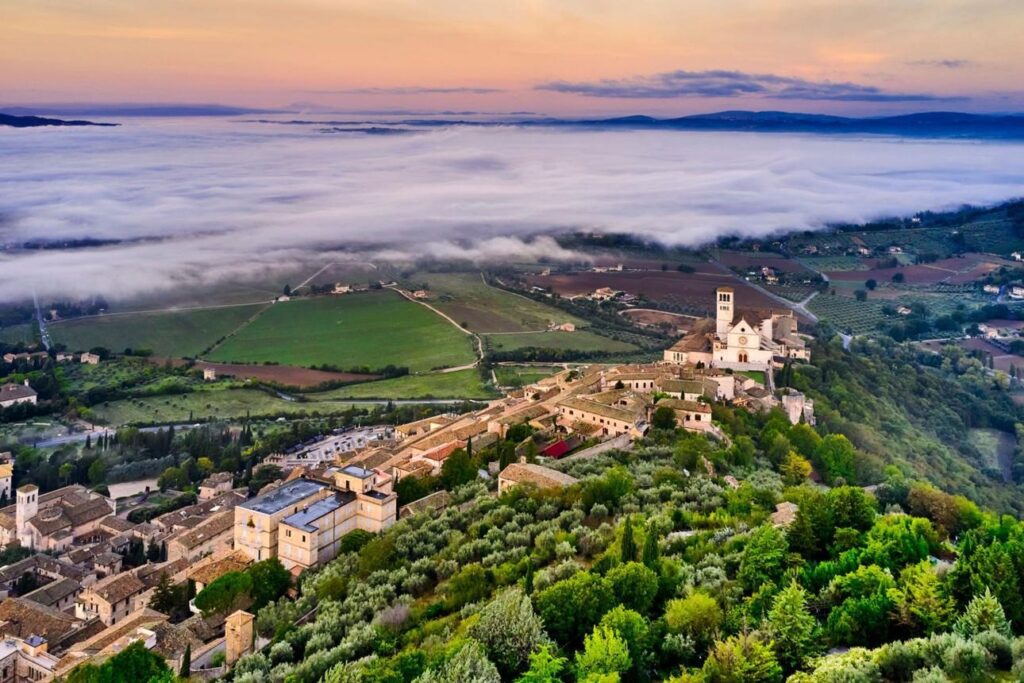
Assisi is one of Italy’s most famous spiritual destinations, attracting visitors from around the world. Located in the rolling hills of Umbria, this medieval town is closely associated with St. Francis of Assisi, whose teachings emphasized simplicity, humility, and respect for creation.
The atmosphere of Assisi makes it particularly appealing to travelers seeking a slower pace. Its narrow stone streets, historic churches, and beautiful countryside encourage visitors to explore on foot.
Among the town’s most important religious landmarks are the Basilica of St. Francis, the Basilica of St. Clare, and the Sanctuary of San Damiano. Visitors may also explore the Eremo delle Carceri, a peaceful hermitage located on Mount Subasio.
This secluded location is associated with St. Francis and his companions, who sought solitude for prayer and contemplation.
Assisi offers an excellent opportunity to combine spiritual activities with gentle walking, cultural sightseeing, and time outdoors. The town’s official tourism service also highlights several spiritual walking routes connected to Franciscan heritage.
2. Camaldoli, Tuscany: Experience the Silence of Monastic Life
Located within the forests of the Casentino region, Camaldoli is among Italy’s most peaceful monastic destinations. The Camaldolese community follows a spiritual tradition that combines communal religious life with periods of solitude and contemplation.
Surrounded by woodland, the monastery and nearby hermitage provide an atmosphere far removed from the noise of major cities. Visitors can explore the area’s religious heritage while experiencing the natural beauty of the surrounding landscape.
The monastery has a long tradition of welcoming guests, and its hospitality facilities offer opportunities for personal reflection and participation in selected spiritual activities, subject to availability and the community’s arrangements.
For travelers interested in authentic Italian religious traditions, Camaldoli offers an experience that goes beyond conventional tourism.
The monastic tradition is also closely connected to craftsmanship, herbal knowledge, and religious objects. Holyart features monastery-inspired products, traditional religious gifts, and devotional articles that can help travelers maintain a meaningful connection to the spiritual experiences they encounter in Italy.
Why choose Camaldoli? It is particularly suitable for visitors looking for tranquility, forest walks, religious heritage, and time away from digital distractions.
3. La Verna, Tuscany: A Retreat Surrounded by Nature
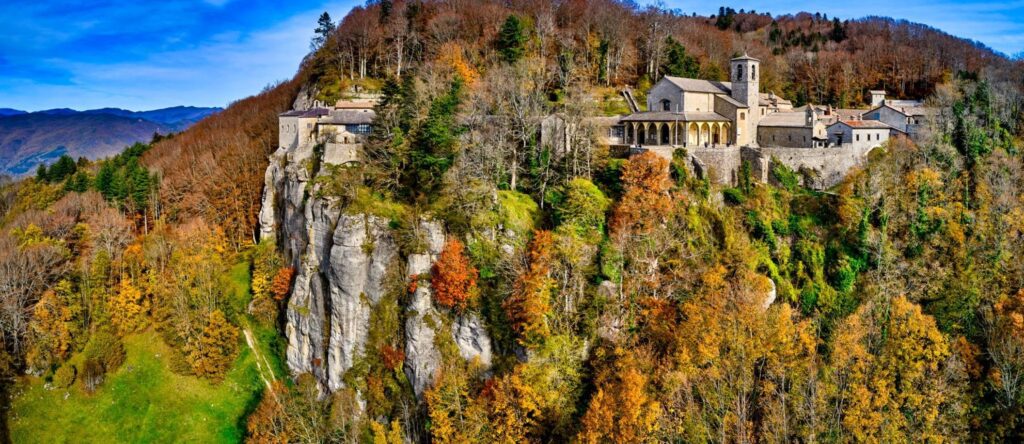
The Sanctuary of La Verna is located in the mountains of eastern Tuscany, surrounded by dense forests and beautiful natural scenery. According to Franciscan tradition, this is where St. Francis received the stigmata in 1224.
The sanctuary has remained an important destination for religious pilgrims for centuries. Today, it also appeals to visitors seeking a peaceful environment for reflection.
The mountain setting creates a strong sense of separation from everyday life. Walking through the surrounding forests, visitors can appreciate the natural landscape while exploring the sanctuary’s historic chapels and religious buildings. La Verna also offers organized spiritual initiatives, including retreats and prayer experiences for different groups.
Because accommodation arrangements and retreat programs may vary, visitors should contact the sanctuary before planning an overnight stay.
4. Monte Oliveto Maggiore, Tuscany: Find Peace in the Countryside
For travelers who appreciate beautiful rural landscapes, Monte Oliveto Maggiore offers a wonderful setting for a peaceful getaway.The abbey is situated among the distinctive clay hills of the Crete , one of Tuscany’s most visually striking countryside areas.
Founded in the fourteenth century, the monastery remains home to a Benedictine community. Its remarkable architecture, frescoed cloisters, and surrounding gardens create an atmosphere that encourages visitors to slow down.
One of the abbey’s artistic highlights is its fresco cycle illustrating the life of St. Benedict. These artworks connect religious history with the broader artistic achievements of Renaissance Italy.
The abbey also provides hospitality for individuals and groups seeking periods of rest and spiritual reflection.
According to the community, guests may participate in the monastery’s liturgical life, subject to its established arrangements.
Combining a visit to the abbey with nearby Tuscan villages can create a relaxing itinerary focused on culture, countryside walking, and meaningful experiences.
5. Subiaco, Lazio: Discover Italy’s Benedictine Roots
Located east of Rome, Subiaco is an important destination for visitors interested in the origins of Benedictine monastic spirituality. The area is associated with St. Benedict of Nursia, who spent time living in solitude before developing the monastic tradition that would influence much of Western Christianity.
One of the most remarkable sites is the Monastery of the Sacred Cave, also known as the Sacro Speco. Built into a rocky mountainside, the monastery features historic chapels, medieval frescoes, and impressive views of the surrounding landscape.
Nearby, the Monastery of Santa Scolastica adds another dimension to the area’s religious heritage.
Together, these destinations offer a fascinating introduction to the history of monastic communities. Subiaco is particularly suitable for travelers staying in Rome who want to explore a less crowded destination within the Lazio region. Visitors interested in quiet reflection can also enjoy the surrounding mountains and countryside.
What to Expect During a Spiritual Retreat in Italy
Spiritual retreats vary considerably depending on the destination and the religious community organizing them. Some programs focus on structured prayer, spiritual guidance, and participation in religious services.
Others may emphasize silence, personal reflection, religious education, or guided activities. Before booking, travelers should understand the nature of the retreat.
A monastery guesthouse is not necessarily the same as a wellness resort. Accommodation may be simple, meal times may be fixed, and visitors may be asked to observe quiet hours or participate respectfully in communal routines. Some retreats are designed specifically for practicing Catholics, while others welcome a wider range of visitors interested in reflection and cultural exchange.
It is always advisable to confirm participation requirements directly with the organization.
Tips for Planning a Spiritual Retreat in Italy
A successful retreat begins with choosing the right environment.
Consider the following recommendations:
- Choose your purpose: Decide whether you want religious guidance, quiet reflection, cultural exploration, or a combination of activities.
- Research the retreat program: Check accommodation arrangements, scheduled activities, and participation requirements.
- Pack appropriately: Comfortable clothing, walking shoes, and modest outfits are particularly useful when visiting monasteries.
- Limit digital distractions: Reducing screen time can make it easier to appreciate the retreat experience.
- Respect local traditions: Follow community rules regarding photography, silence, meals, and religious services.
- Make time for nature: Walking through forests, gardens, and historic villages can complement quieter periods of reflection.
It is also important to approach the experience with realistic expectations. The purpose of a spiritual retreat is not necessarily to maintain a packed schedule or visit numerous attractions. Instead, the value often comes from giving yourself permission to slow down.
Conclusion: Rediscover Peace Through Spiritual Travel in Italy
Spiritual retreats in Italy offer a meaningful alternative to conventional vacations.
From the peaceful streets of Assisi to the forests of Camaldoli and the mountain sanctuary of La Verna, each destination provides a different opportunity to experience quiet surroundings, cultural heritage, and personal reflection. Italy’s religious communities have preserved traditions of hospitality, contemplation, and simplicity for centuries.
Today, these traditions continue to offer inspiration to travelers seeking greater balance and a deeper connection with their surroundings. Whether you choose a structured religious retreat or simply spend a few days exploring peaceful monasteries and historic villages, a spiritual journey through Italy can become one of your most rewarding travel experiences.


